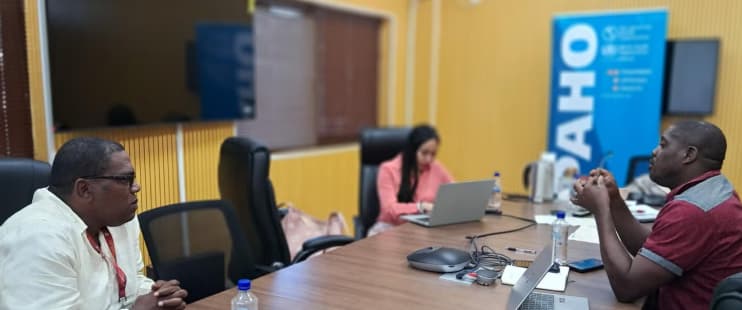
Dominica and PAHO are developing integrated surveillance guidelines to improve health data collection and emergency response systems.
Dominica: The Ministry of Health, Wellness and Social Services has announced that it has partnered with the Pan American Health Organisation (PAHO) to host a four-day technical mission aimed at advancing the development of National Integrated Surveillance Guidelines in the country. The development of these surveillance guidelines had officially commenced two years ago in 2024 and will soon play a critical role in strengthening Dominica’s national public health surveillance system.
This technical mission took place earlier in the month from May 5 to May 8, 2026, and according to the Ministry of Health and PAHO, the integrated surveillance guidelines will help improve how health data is collected, analysed, and used. This will in turn lead to public health problems being quickly detected, reported, and responded to in line with the International Health Regulations (2005).
The four-day mission was facilitated by Contractor Eden Augustus of PAHO who conducted a series of key informative interviews with government officials from multiple sectors including the Ministry of Agriculture, the Primary Health Care Department and the Environmental Health Department within the Ministry of Health, Wellness and Social Services as well as the Ministry of Education and the Ministry of Tourism.
Moreover, contributions were also collected from the Dominica Air and Seaports Authority, the Dominica Water and Sewerage Company, as well as the Gender Unit and Health Promotion Unit.
According to PAHO’s Contractor, the interviews provided “valuable insights into the roles and responsibilities of key stakeholders involved in surveillance activities, including reporting mechanisms, communication channels, and intersectoral coordination across ministries and departments.”
The Ministry of Health, Wellness and Social Services shared the importance of this initiative in not only strengthening the country’s public health systems but also promoting more people-centred approaches and systems going forward.
Taking to Facebook to share highlights of the mission, the Ministry wrote, “This initiative will help improve coordination across health services, strengthen primary health care, enhance emergency preparedness, and ensure that individuals and families receive timely, continuous care closer to their communities. Together, we are creating a healthier future where no one is left behind.”